Institutional Crypto Staking Dashboard
Blockdaemon is like AWS for crypto. Banks, exchanges, and enterprises like Goldman Sachs and Microsoft use it to deploy crypto servers and stake assets without operating their own data centers.
I joined the Blockdaemon team as the founding designer after Blockdaemon acquired my consultancy, Gravy. There was no existing design organization when I arrived.
Institutional staking
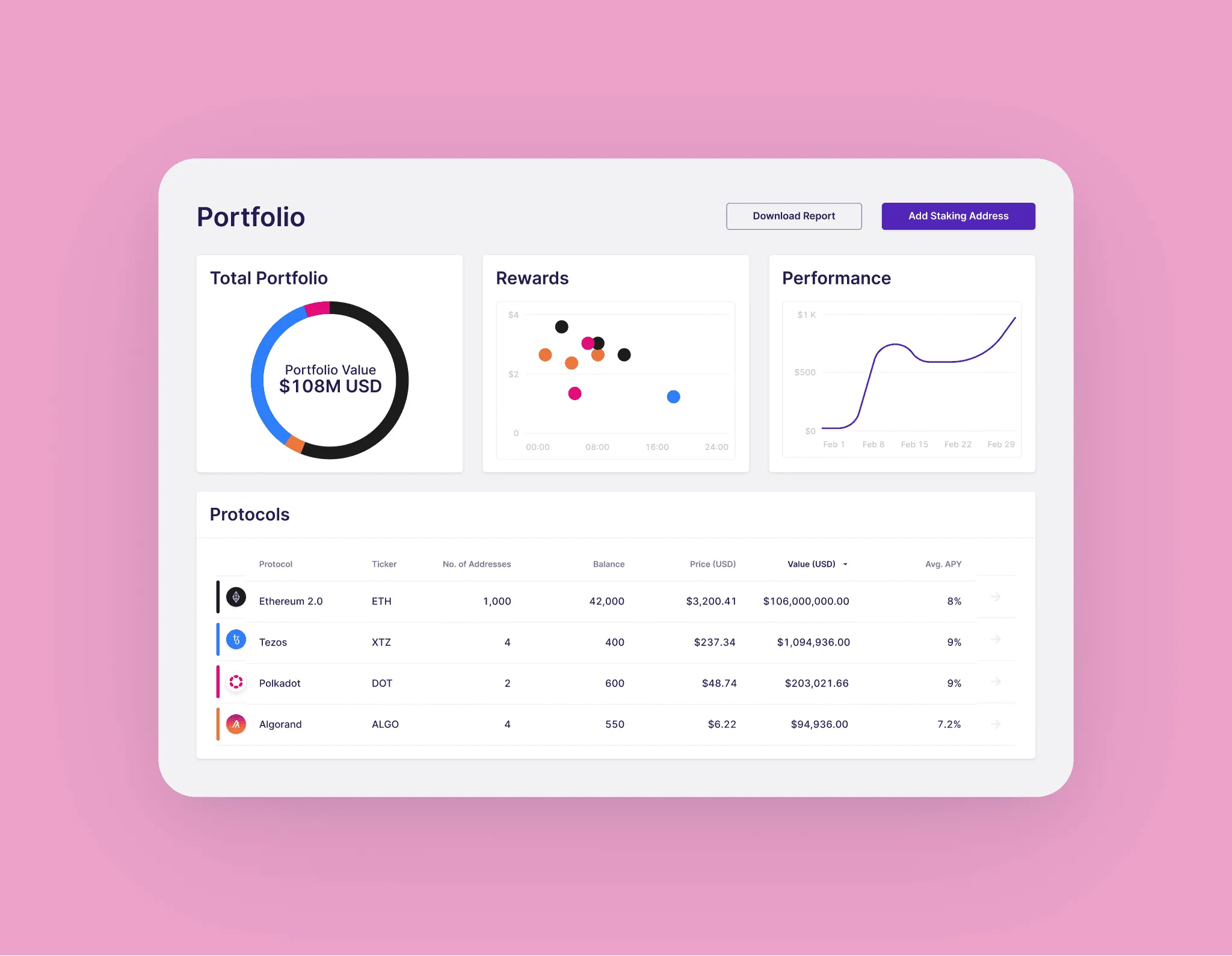
Institutional treasury teams manage portfolios worth hundreds of millions across multiple blockchains. They use Blockdaemon to stake their assets and earn income, but the existing staking experience was built for retail users and didn’t meet their needs.
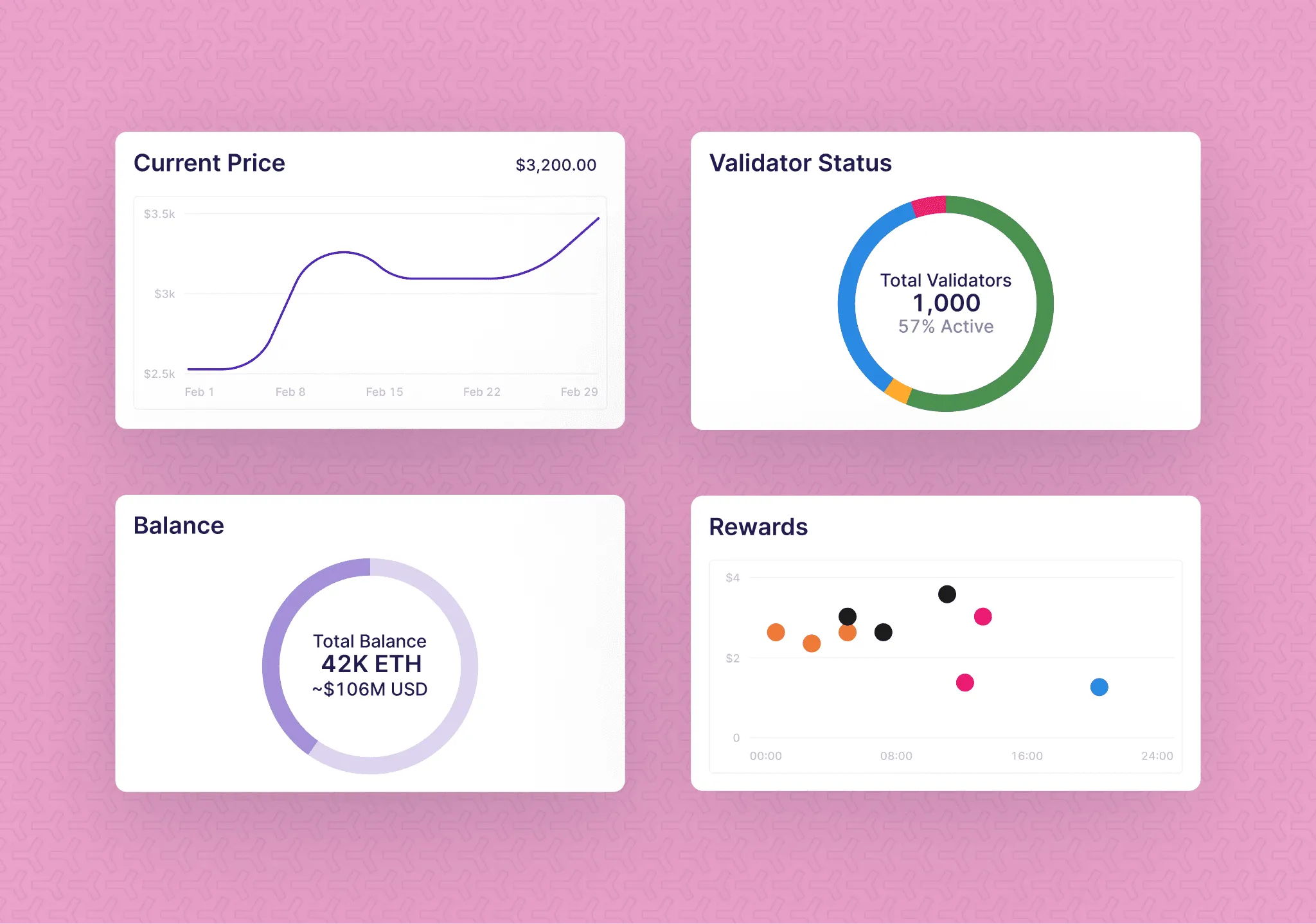
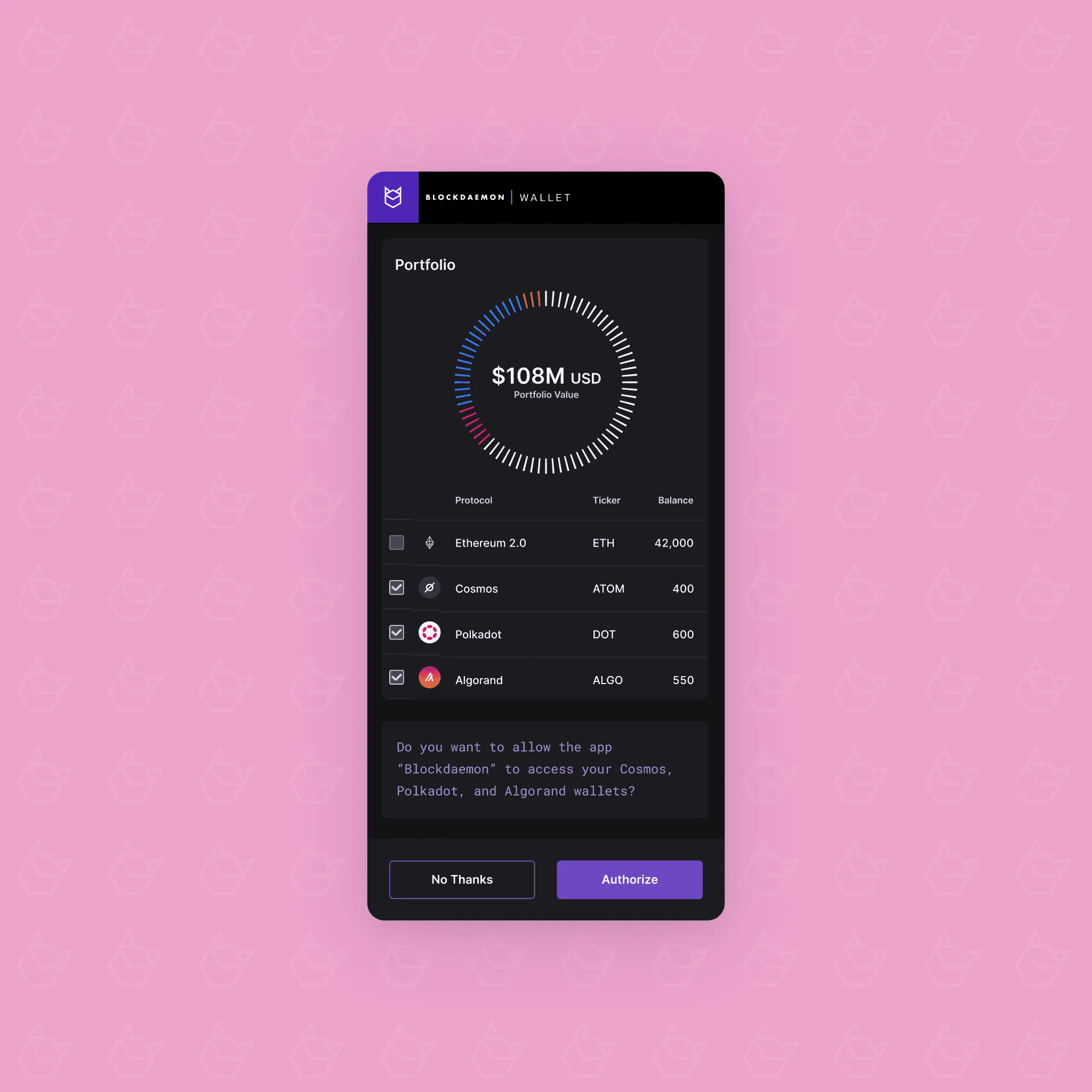
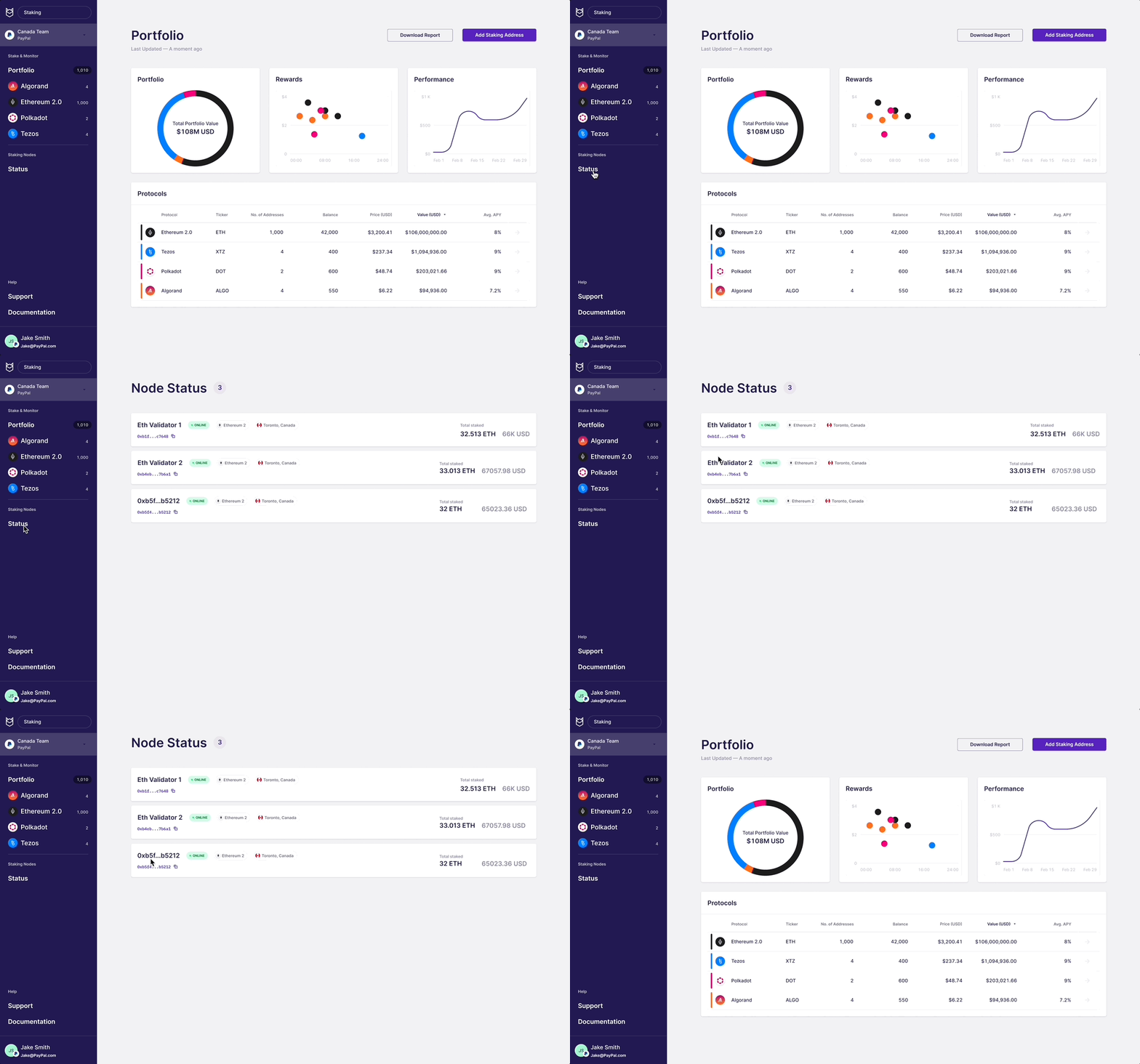
We designed a new dashboard experience for institutional staking customers. The layout focuses heavily on displaying the right level of data density without losing the signal.
Ubiquity API
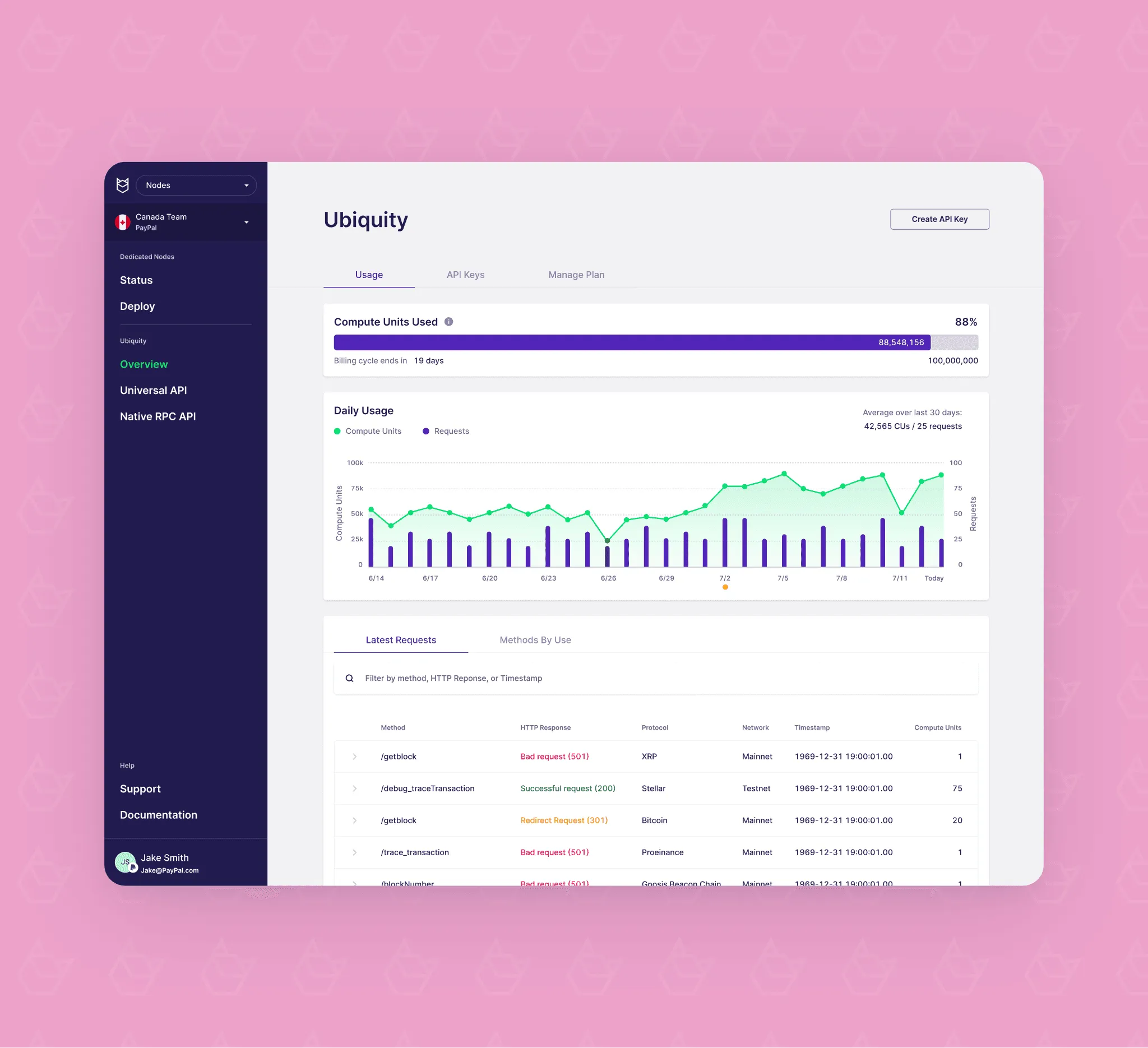
Ubiquity is Blockdaemon’s developer-facing API for interacting with crypto data across chains. We built a dashboard to visualize usage against rate limits and request-log auditing; both surfaced in developer interviews.
Results
The staking dashboard shipped into the $207M Series C materials and was part of the investor demo flow when the round closed.
"Blockdaemon nabs $1.3B valuation in $155M funding round. SoftBank Vision Fund 2 led the funding."
"Blockdaemon raises $28 million in Series A funding to help institutions quickly and securely scale blockchain infrastructure. Round led by Greenspring Associates, with participation from Goldman Sachs."
Credits
Design: Ari Zilnik
Design: Andrew Athinodorou
Design: Sohee Cho
Design: Jordan Braun
Design: Carolyn Zhu
Design: Rachel Cho
Product: Jordan Bibla
Shipped at Blockdaemon, 2021-2022.