Node Deployment Flow
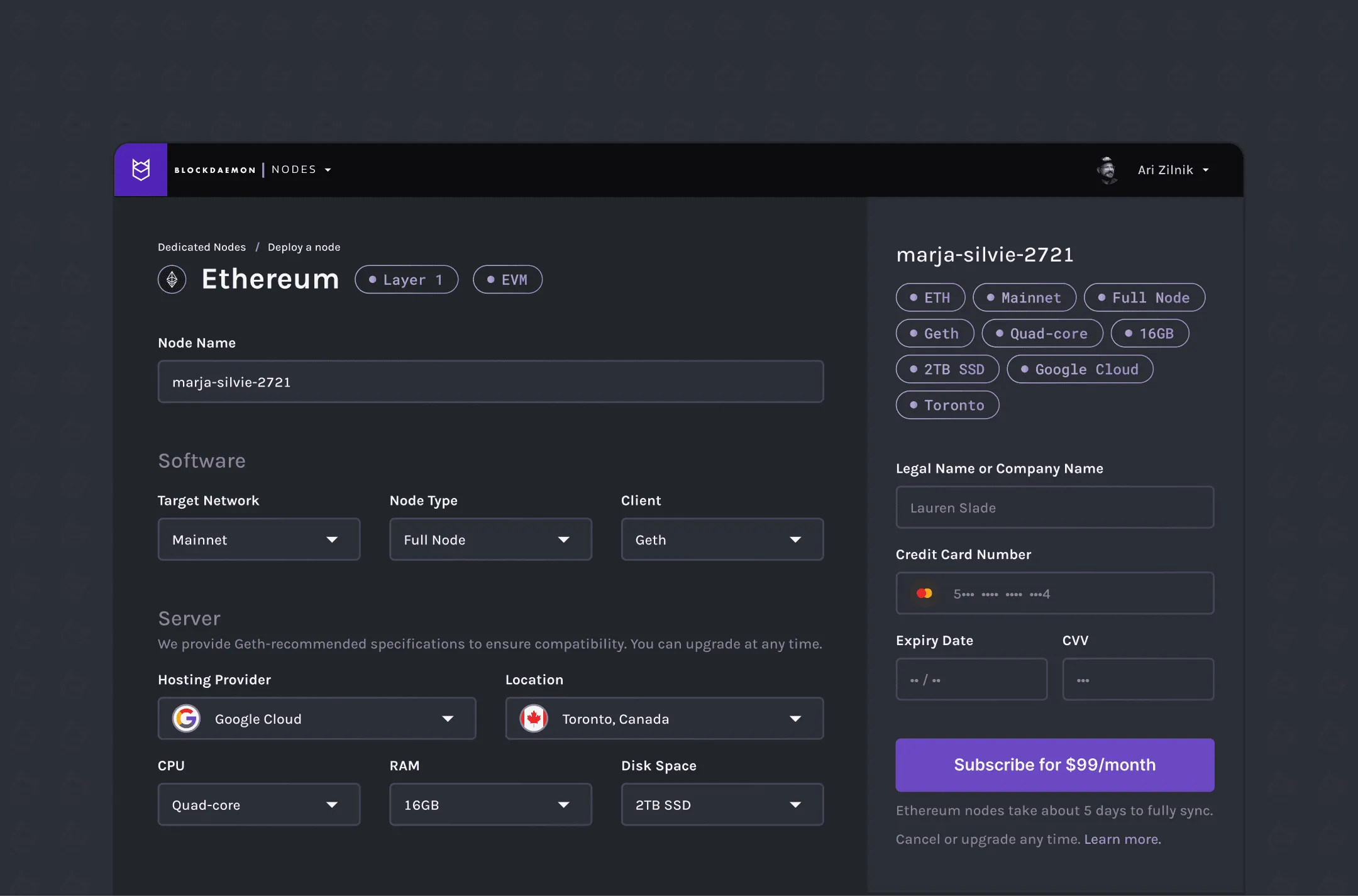
Deploying a blockchain node at Blockdaemon used to mean filing a support ticket and waiting days to weeks while engineers configured it by hand. We rebuilt deployment as an e-commerce checkout: pick a chain, configure, buy. The process shortened to minutes, and usage grew 23x in the first year.
Blockdaemon runs blockchain infrastructure for banks and enterprises, and nodes are essentially servers with crypto software installed. I was the founding designer, joining when Blockdaemon acquired my consultancy, Gravy.
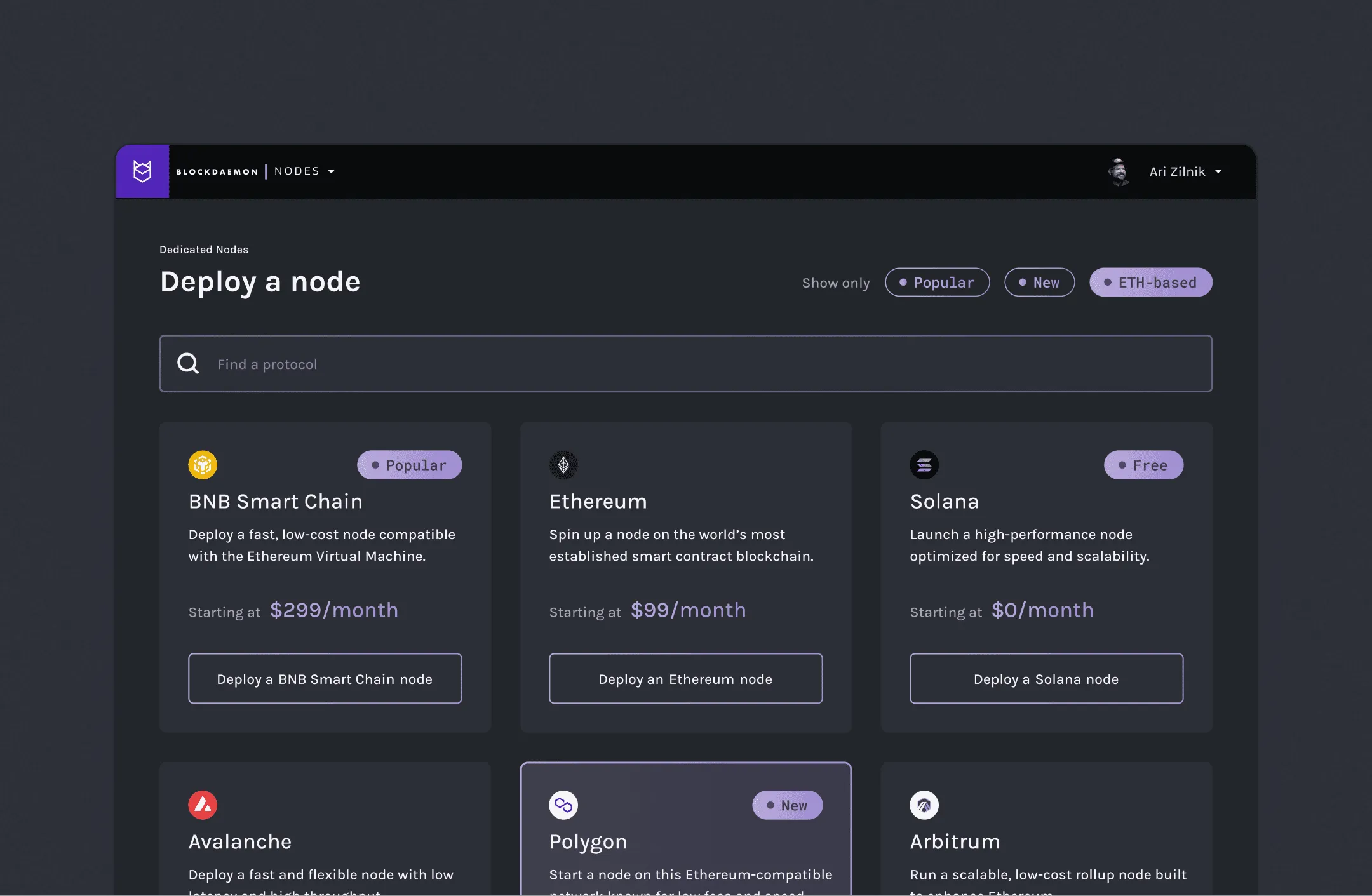
Purchase metaphor at every step
The obvious shape for this product was a server configuration wizard. We went the other way: every screen reads like a Shopify checkout, because our users’ mental model was procurement, not server administration. Teams were buying infrastructure, so we let them buy it.
Chain-aware progressive disclosure
Bitcoin, Ethereum, and Solana don’t share a config schema. The checkout hides everything except what the selected chain actually needs, with smart defaults pre-filled. A user never sees the full matrix of options; they’re guided through a tailored flow for the chain they picked.
Confirming user intent
Before committing to a purchase, the user sees the cost, the configuration, and the SLA Blockdaemon stands behind. That summary gave teams confidence they were buying the right thing — and fewer deploys came back as support tickets afterward.
Results
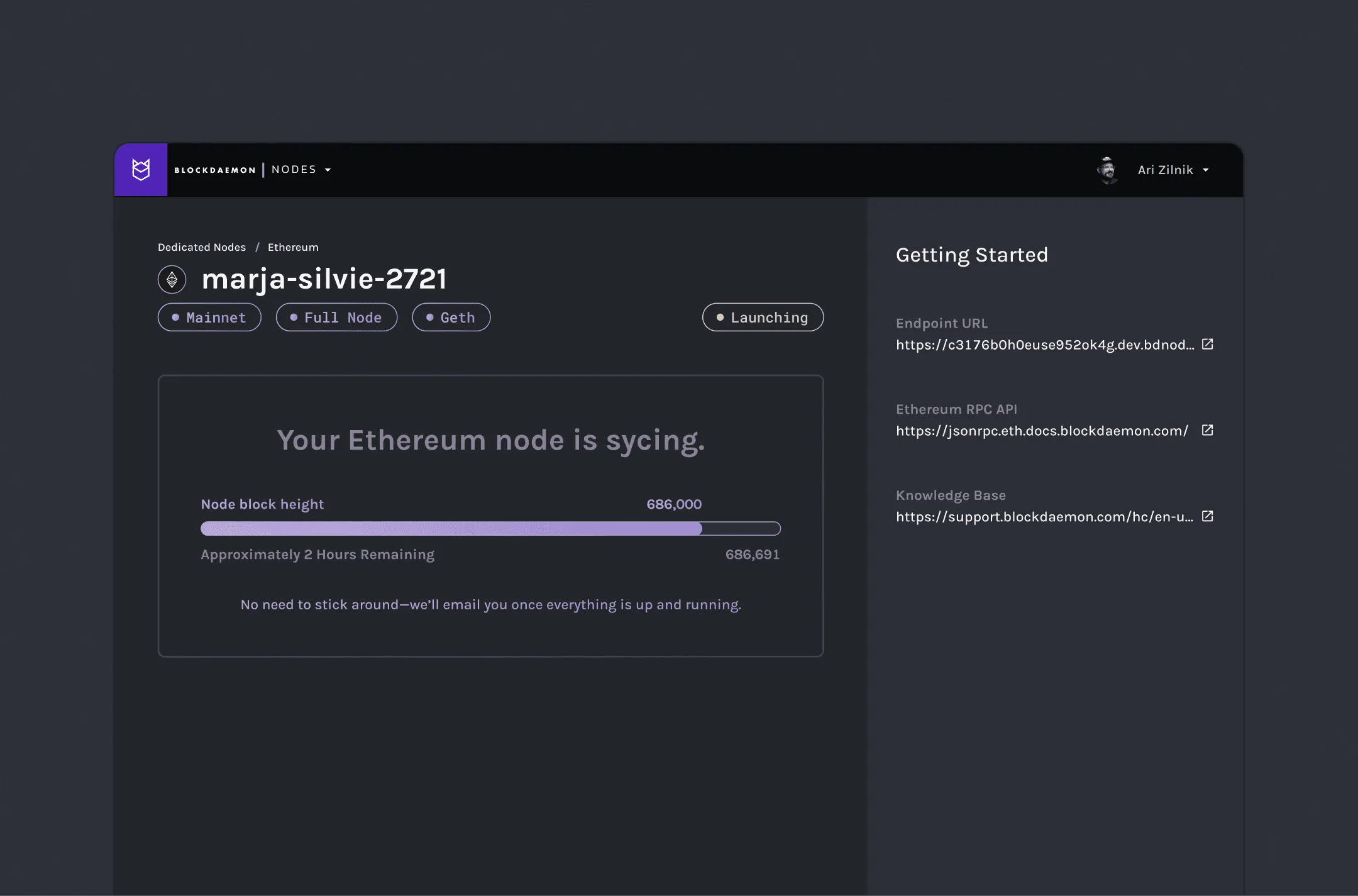
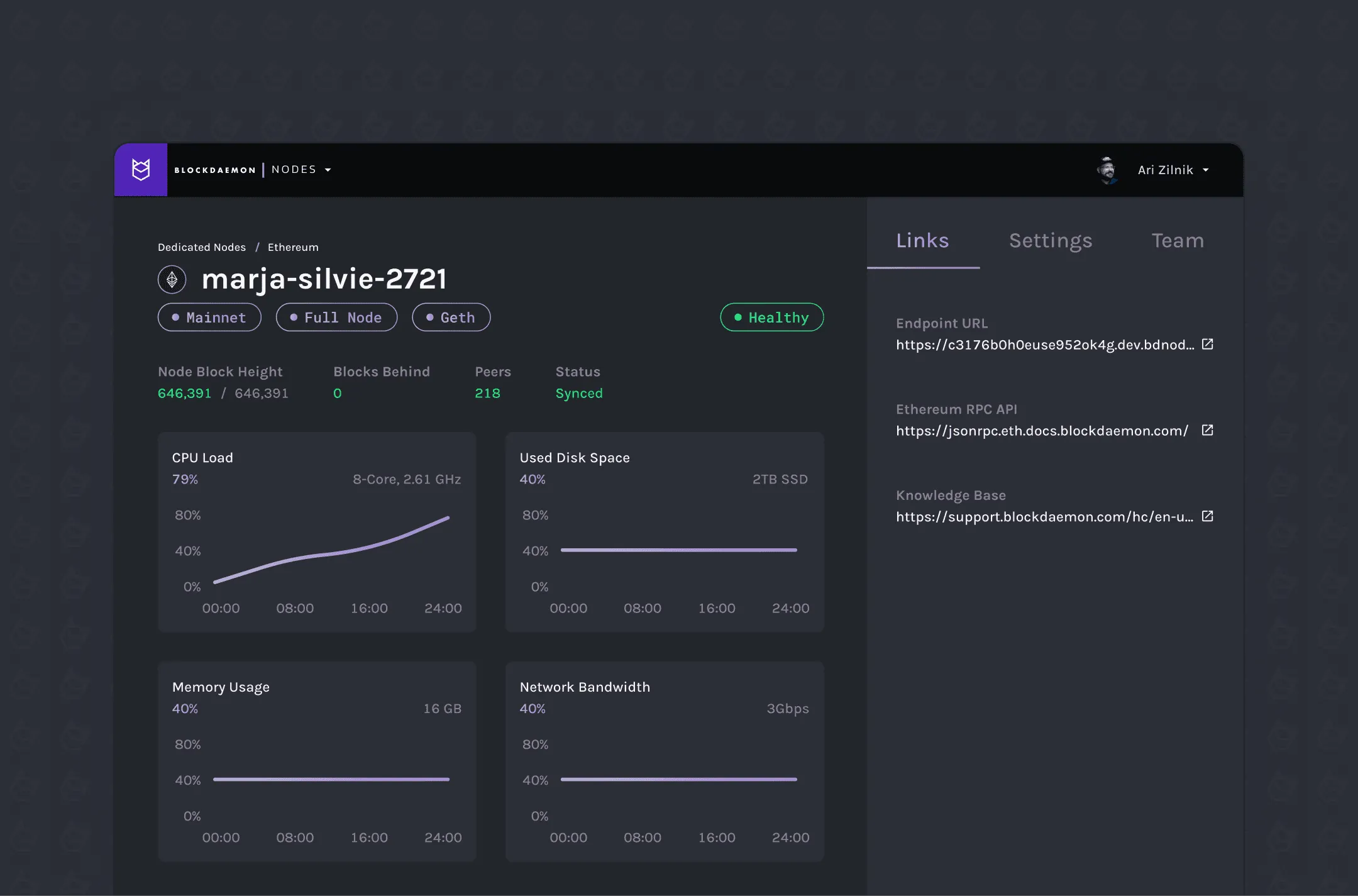
Usage grew 23x within the first year of the redesign. Self-serve replaced a multi-week sales cycle — DevOps teams went from opening support tickets to deploying in minutes — and V1 shipped four months after research kickoff.
Impact
23x
Node deployment usage growth
4 months
From research kickoff to V1 ship