Telop
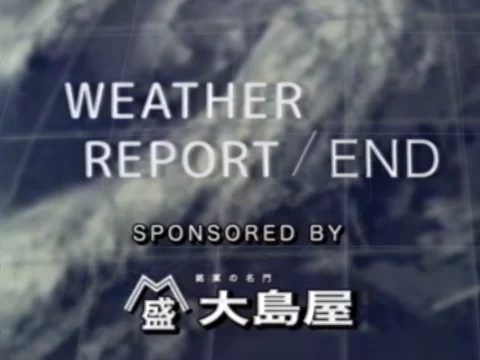
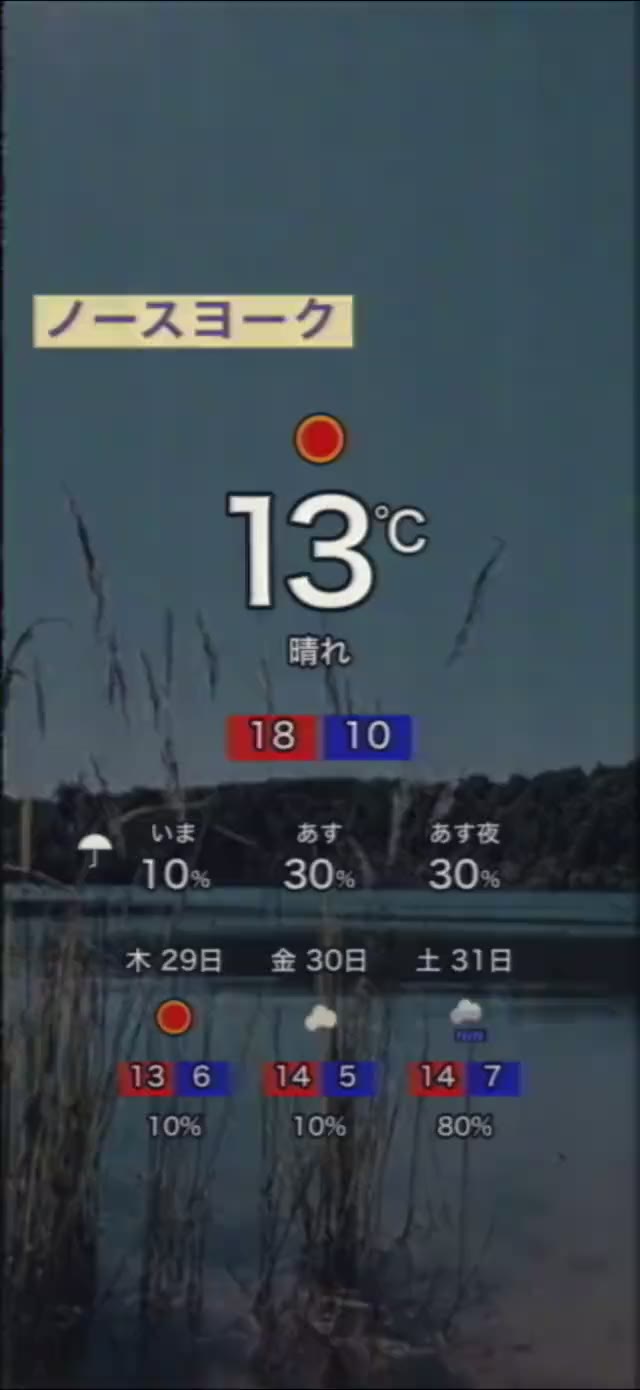
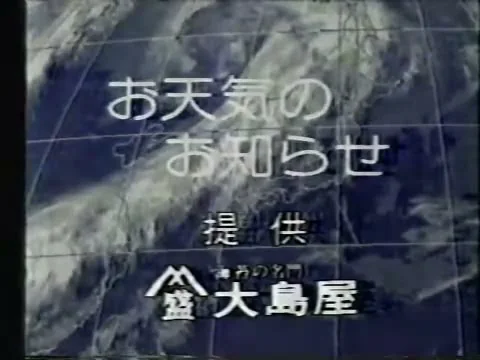
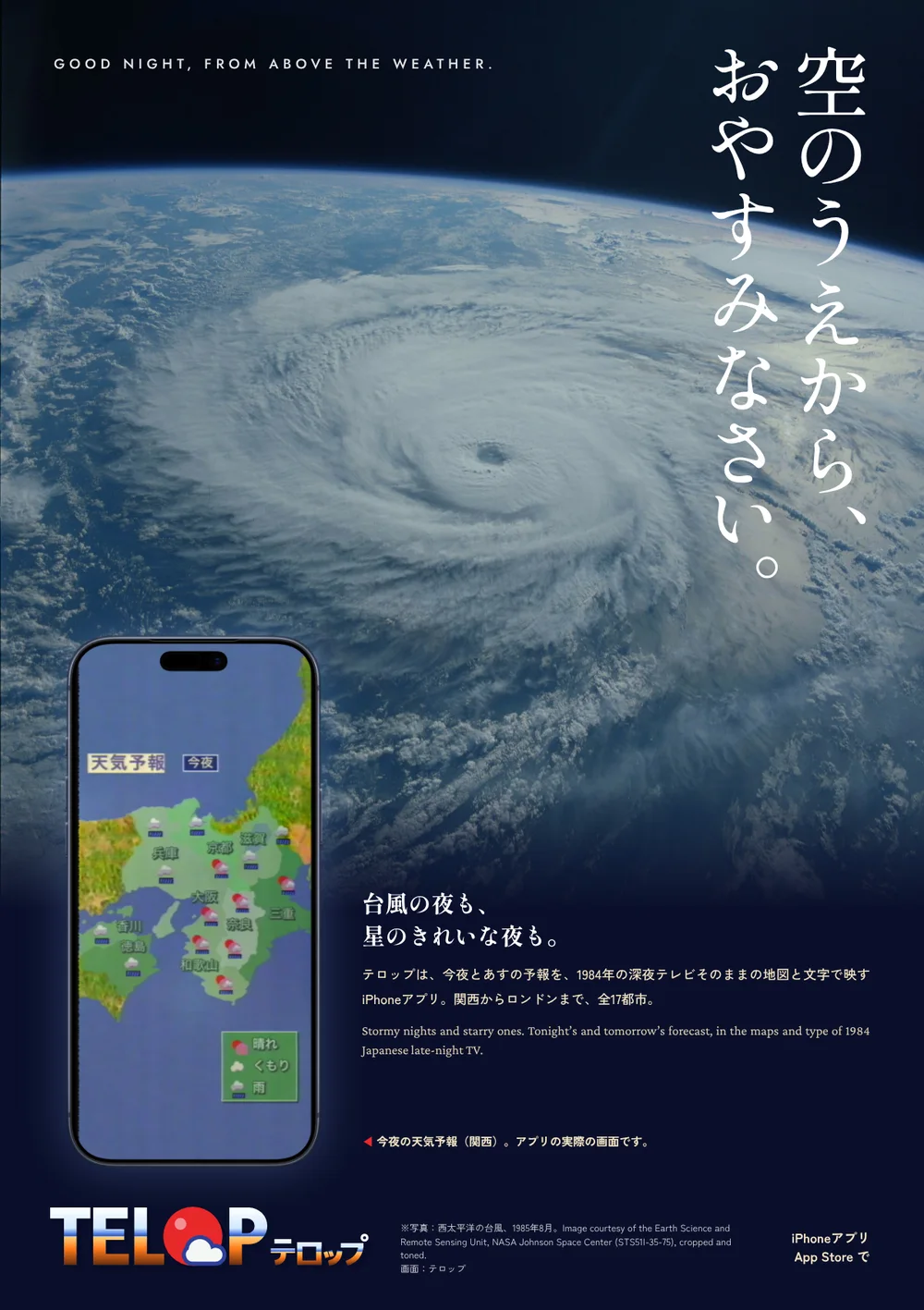
Telop is a 1984 late-night weather broadcast from Osaka, rebuilt down to the VHS tape and running live on an iPhone.
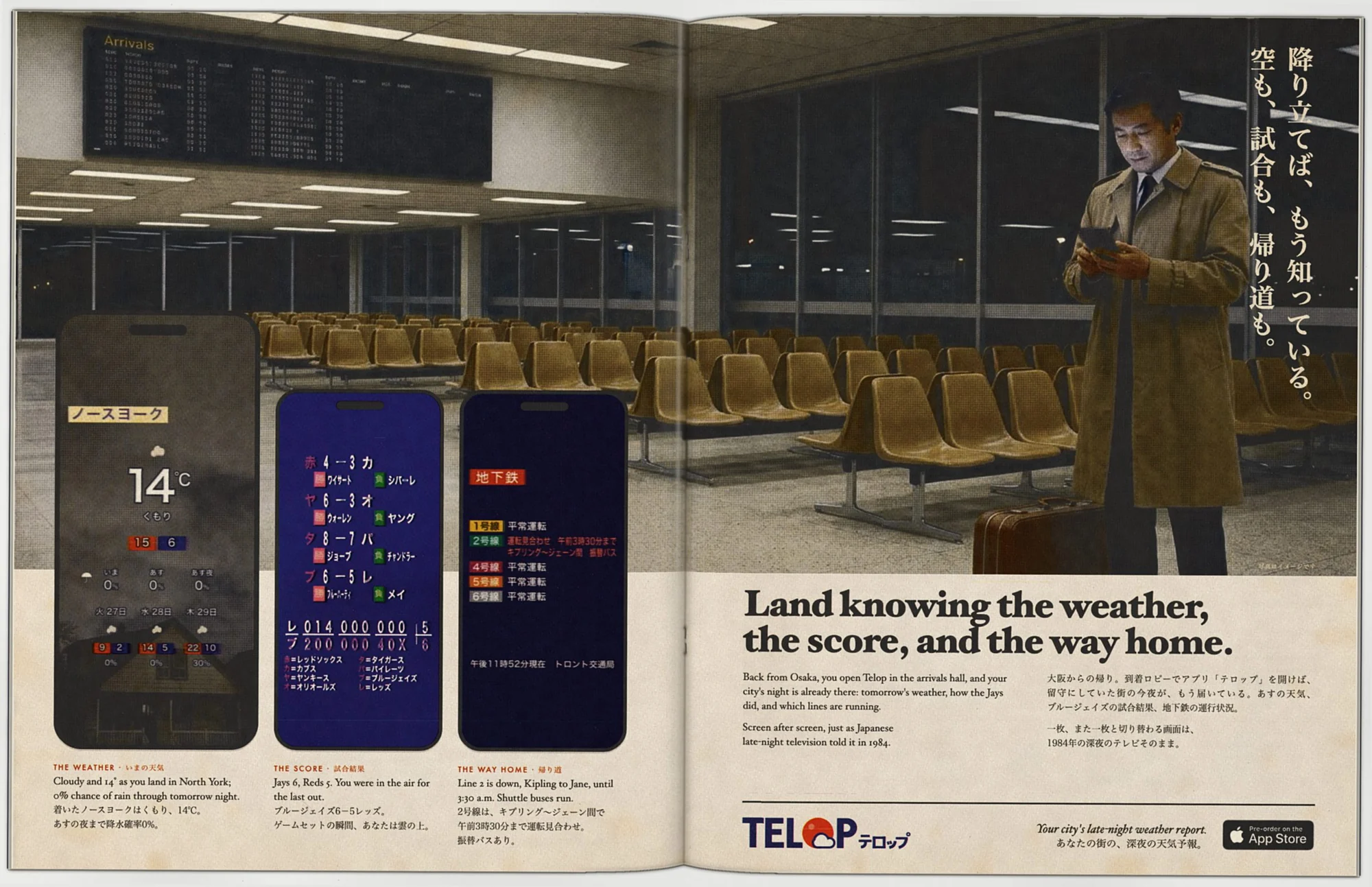
It’s a quick brief for the morning or evening. It tells you whether to bring an umbrella, gives you last night’s scores before you meet friends at the bar, and shows how the trains are running on the way home.
I’ve always loved the look and feel of the era, and this was my chance to build it with today’s technology.
Measured, then judged
I wanted every detail to be right. The goal was simple: put a Telop card next to the same card from the real 1984 tape, and make them hard to tell apart. So I gave my eye a second opinion. Agents rebuilt the broadcast’s cards against frames from that tape over ten loops, and kept a change only when the picture measurably got closer. The numbers showed when we were getting closer, and my eye decided when it was right.
The chain
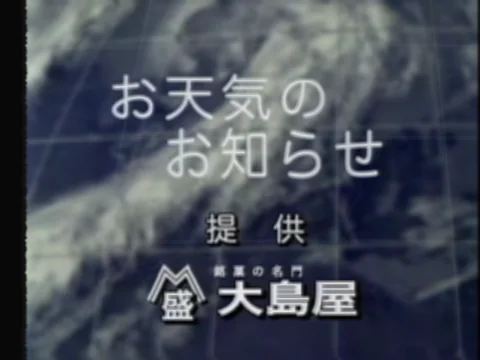
The part I’m proudest of is how fast the signal runs, on the page and on the phone. Here’s one detail of the card, four times: drawn clean, then after the broadcast, the tape and the playback.
01 Clean raster
- I/Q band-limit on air
- FM luma channel · Color-under and deck delay · Time-base error and head switching · FM noise, mottle, chroma blotches · Dropouts
- 1H delay line and field blend · Levels, white knee, overscan
The night shift
I directed and the agents built, mostly overnight, and in the morning I made the calls. Most of it I kept. A team I’d set up in Paperclip, a tool for running agents on their own, started running away from me, so I shut it down.

- The gauntlet. Ari: An authentic piece of 1980s Japan, with extreme detail and accuracy, at 120 frames a second. The agents: Every card rebuilt against the 1984 frames, keeping only what got closer. Approved.
- The clock. Ari: Can we make the clock run smooth at 120 fps, to flex a bit? The agents: The second hand moves every frame now. Only the hands are redrawn, so it stays cheap. Approved.
- A team of agents, on Paperclip. Ari: Set up a team in Paperclip to help me build this app. The agents: Telop Studio is running: a director, two builders, a critic and a researcher, on a $500 cap. Ari: I don’t want it to run amok! Killed.
The world
The reference was the magazines that showed off the new technology of the day: the Walkman, Technics turntables, the jump from camera to CG.



終, the end