AI Recommendation Engine
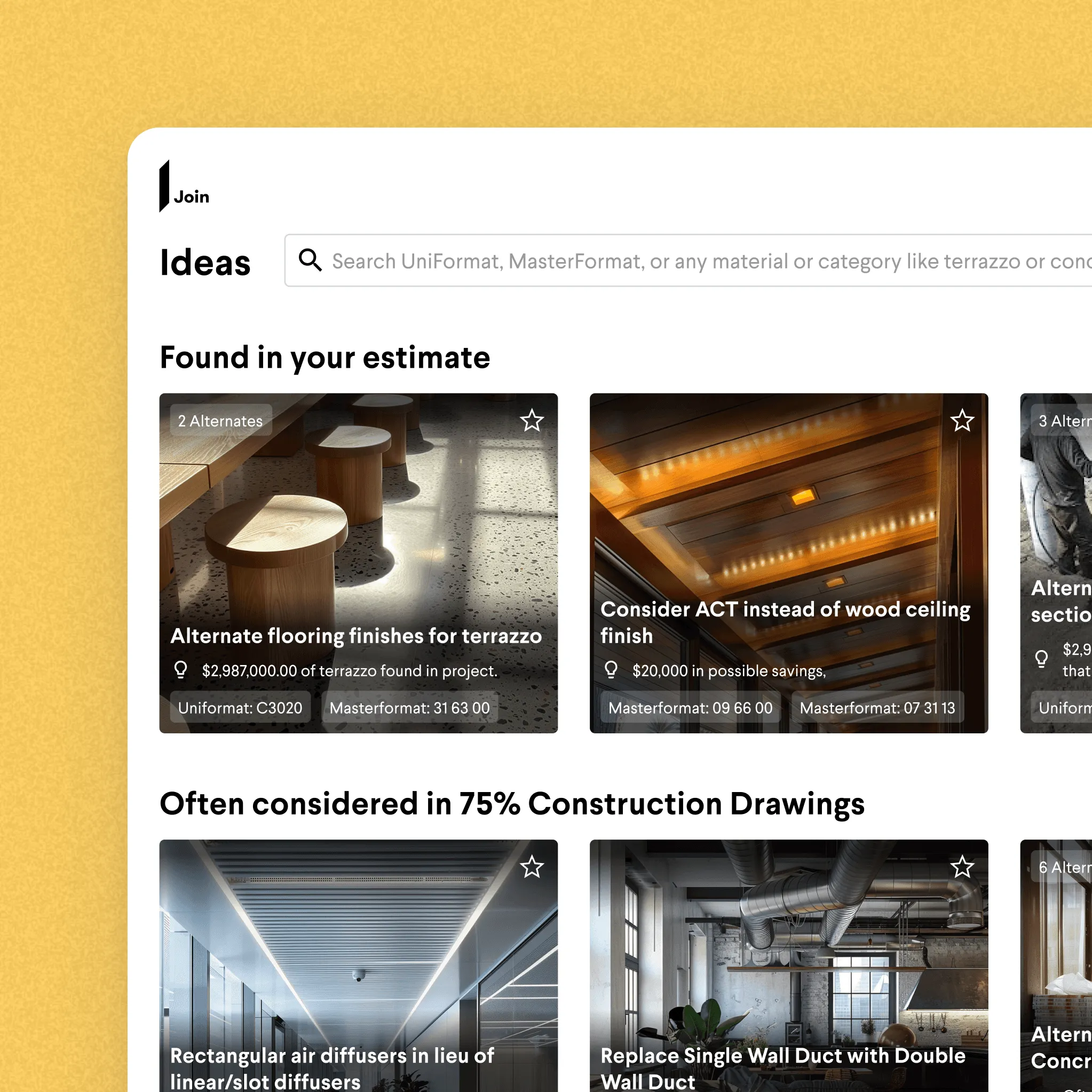
Ideas started life as a materials marketplace. Customer interviews killed that plan — estimators didn’t know what alternatives existed, so they’d never browse a catalog on their own. I pivoted the concept to an AI recommendation engine, took on the acting-PM role alongside design, and we shipped in two months. Within 30 days of launch, one enterprise customer found $500K in savings on their first estimate.
Join is where general contractors manage preconstruction decisions. Ideas puts cost-saving material alternatives inside their estimates: a less experienced estimator might spec a finish at full cost when a substitute would do the same job for half, and that knowledge gap compounds across every line item in every project.
Suggestion carousels
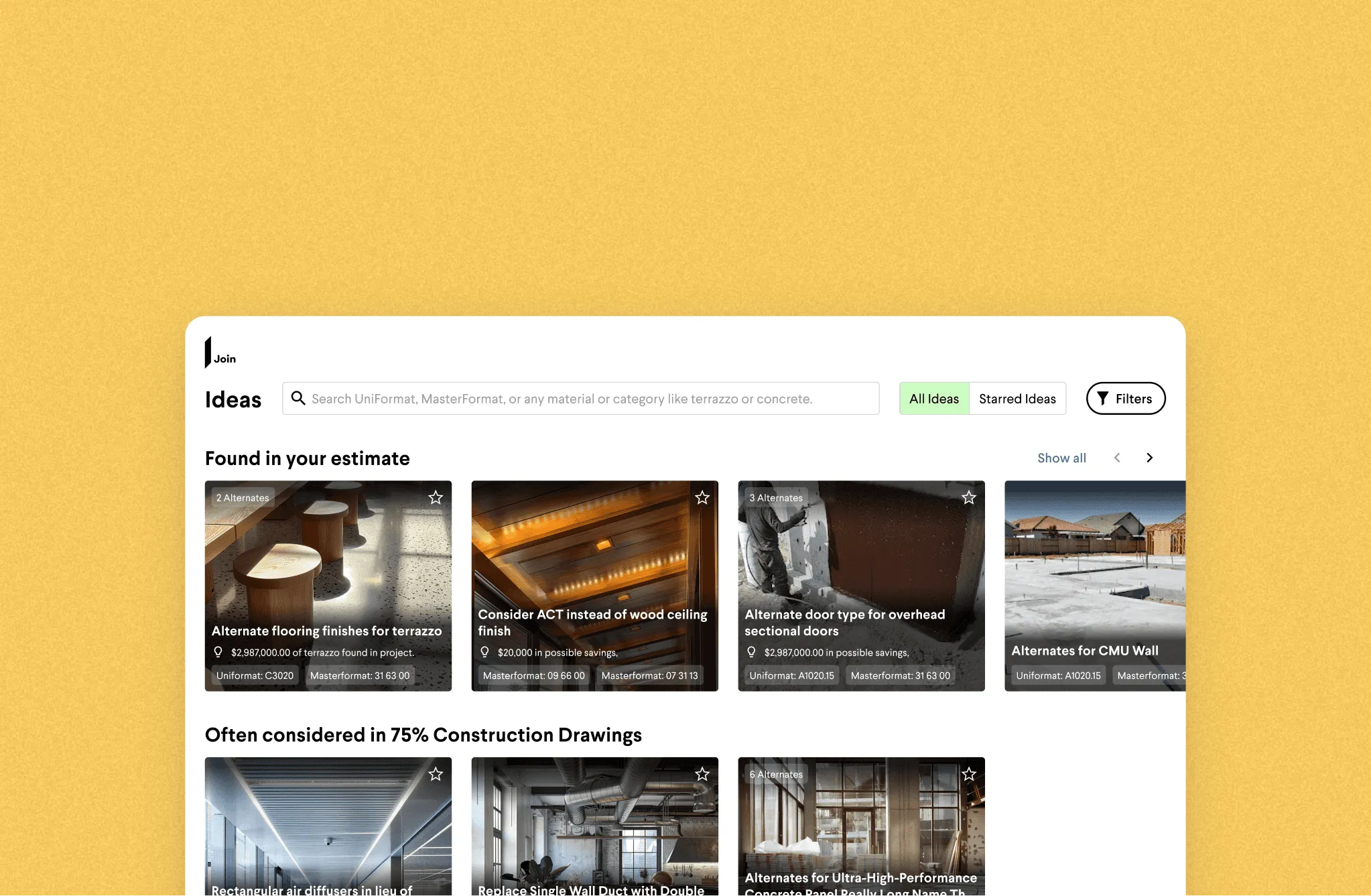
AI-generated suggestions appear as contextual carousels ranked by cost-saving potential. Each carousel groups alternatives by where they appear in the estimate and by construction phase, so estimators see relevant options without searching.
Human review layer
These suggestions affect real buildings and real budgets, so I made the model advisory, not authoritative: a materials researcher validates every suggestion before it reaches an estimator, and nothing gets auto-applied.
I tested card density with AI-coded prototypes against real estimate data before engineering built anything. The cards kept their UniFormat and MasterFormat classification codes because estimators told us in interviews these were non-negotiable for trust.

Forced comparison
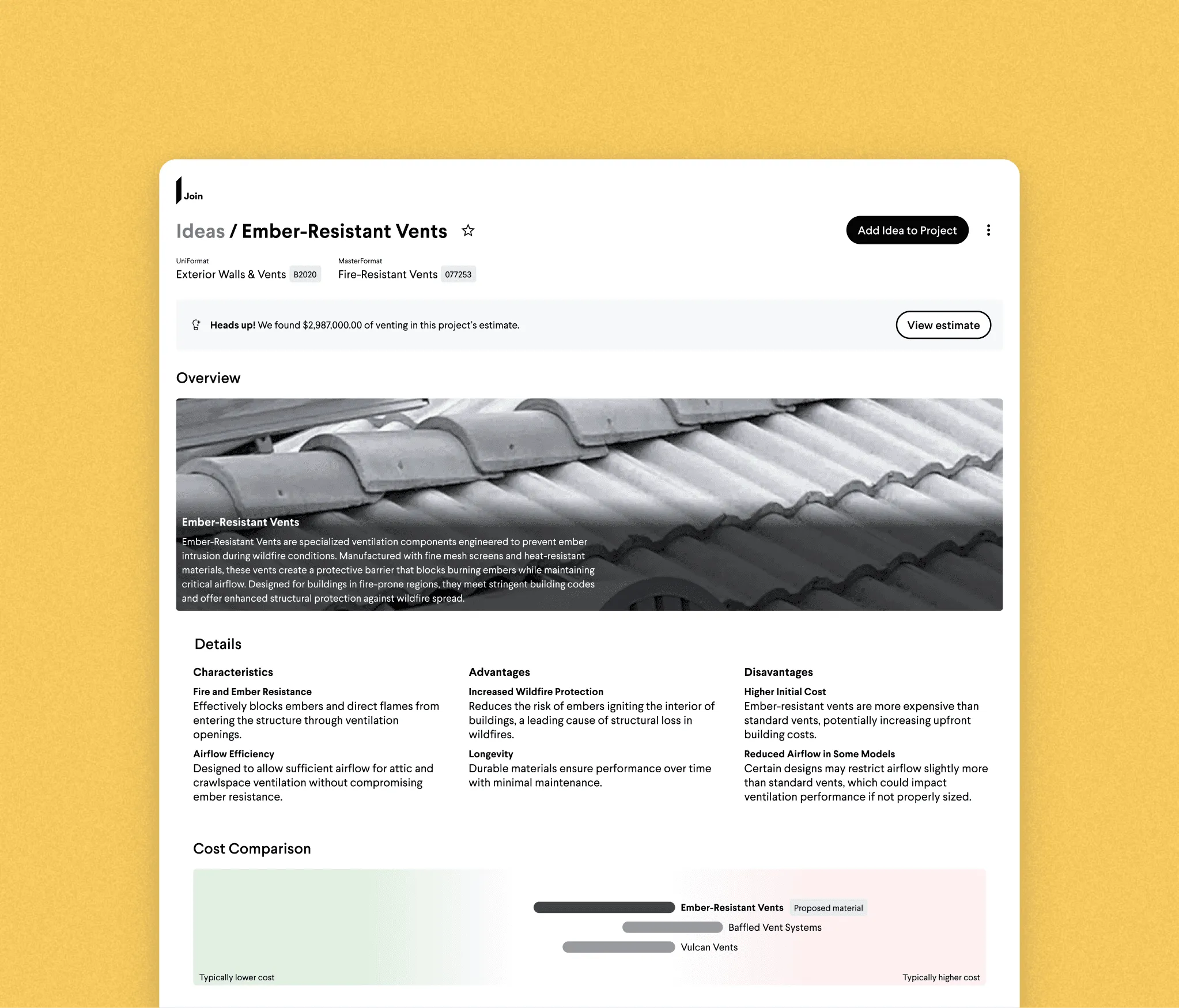
Every recommendation has to be weighed against alternatives before an estimator can accept it. Nothing gets applied in one click.
Results
One enterprise customer saved $500K on their first project estimate within 30 days of launch. The model finds the alternatives; the estimator still makes the call.
Credits
Design + acting PM: Ari Zilnik
Materials research: Kyle Willis
Engineering: Kevin Rakestraw
Engineering: Nick Zukoski
Shipped at Join, 2024.
Impact
$500K
Construction savings for one enterprise customer in 30 days
2 months
From research kickoff to launch